Food Plots Matched to Iowa Browse Pressure
Food plot installation across the state of Iowa for landowners preparing whitetail and turkey habitat on properties where soil and seed selection determine plot survival
Food plots fail in central Iowa when seed varieties are chosen without careful consideration of Iowa's diverse soils and intense browse pressure throughout the year. BadHabitz Outdoors provides full-service food plot installation from soil preparation through seeding — using years hands-on experience we select varieties matched to Iowa's specific growing seasons, soil chemistry, and wildlife feeding patterns. Properties across the state with field edges and timber pockets are ideal candidates for small-plot placement where browse pressure can be managed and plots remain accessible during wet periods.
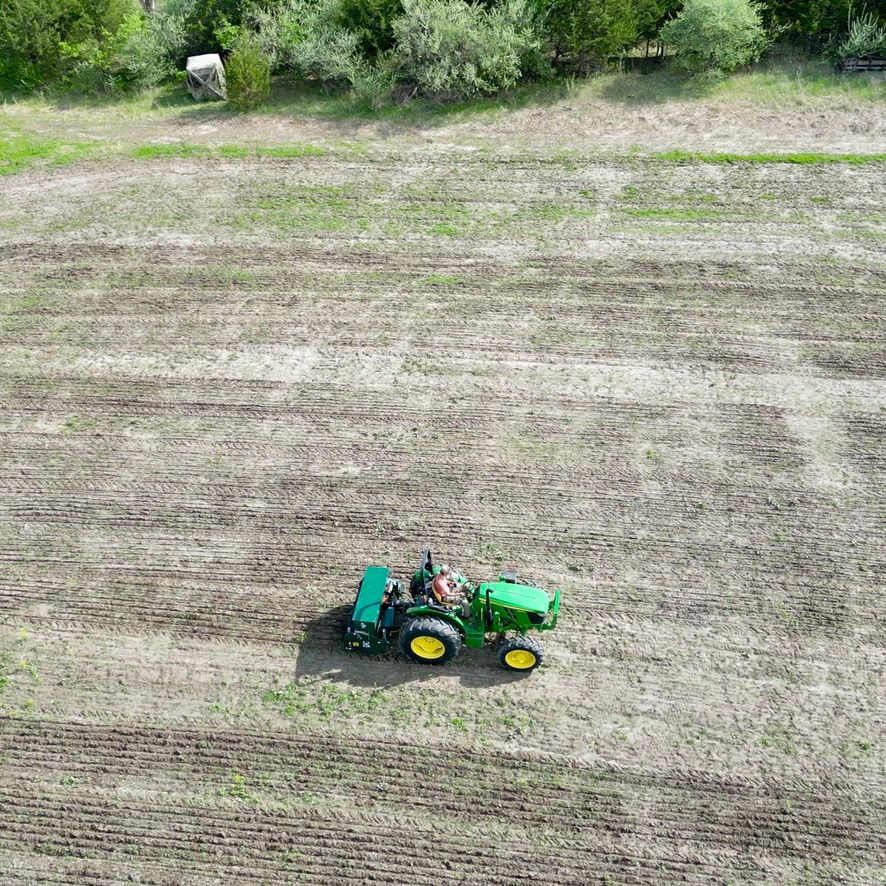
Installation begins with soil testing to determine pH levels and nutrient deficiencies followed by amendments specific to the chosen seed variety. Seedbed preparation involves either disking or no-till drilling into existing ground, depending on soil condition and the timing window available before the optimal planting date.
Schedule a plot site evaluation and soil assessment to determine which seed varieties will perform on your specific ground conditions.
Why Seed Variety Selection Determines Plot Performance
Generic regional seed recommendations ignore the differences between Iowa's diverse soils and the sandier ground found in neighboring states. Varieties are selected by an expert who considers the History of Iowa's shorter fall growing window, higher rainfall during establishment, and the heavy browse pressure that occurs once crops are harvested from surrounding ag fields. Plots seeded with Iowa-matched varieties establish faster, tolerate browse better, and remain attractive to deer later into winter.
Once plots are established, you'll notice defined feeding patterns during morning and evening hours, concentrated hoof traffic along approach routes from bedding cover, and measurable browse pressure that keeps vegetation height uniform across the plot. Successful plots remain greener and palatable longer into the season than surrounding native vegetation.
Plot size and shape decisions factor in visibility from planned stand locations, proximity to bedding areas, and access routes that allow entry and exit without contaminating the plot area with human scent. Smaller plots positioned near staging cover often outperform large open plots that deer avoid during daylight hours due to exposure.
Answers to Frequent Food Plot Questions
Landowners planning food plot installation across Des Moines and central Iowa generally ask about timing, soil requirements, and how plots integrate with existing habitat features.
What soil amendments are most commonly needed for food plots in central Iowa?
Lime applications to raise soil pH and correct acidity are the most frequent requirement, particularly in low-lying areas where organic matter decomposition has acidified the topsoil over decades of row crop production.
When should food plots be planted to ensure establishment before hunting season?
Spring plantings for warm-season annuals should occur after soil temperatures reach 55 degrees, while fall brassica and cereal grain plots perform best when seeded in late July through early August before Iowa's late-summer dry periods.
How much acreage is needed for a functional food plot on a small property?
Plots as small as a quarter-acre can attract and hold deer if positioned correctly near bedding cover and planted with high-attraction varieties that tolerate heavy browse pressure.
Do food plots require ongoing maintenance after initial planting?
Most plots benefit from mowing or light disking between growing seasons to control weed pressure and prepare the seedbed for replanting, though perennial clover plots can persist for multiple years with only pH monitoring and occasional frost seeding.
Why do some plots get wiped out by deer while others last through the season?
Browse pressure overwhelms plots that are too small for the local deer density, planted in high-visibility locations where deer feed heavily during daylight, or seeded with varieties that lack the regrowth capacity to recover from repeated grazing.
Badhabitz Outdoors handles plot installation as part of a broader habitat strategy, not as isolated food sources disconnected from bedding, cover, and stand placement. Request a property consultation to determine optimal plot locations and seed variety selection based on your soil conditions and hunting objectives.
We are a dealer for!!

Domain Food Plot Products