
Land Clearing Built for Deer Movement
Forestry mulching in Des Moines for properties where woody overgrowth blocks travel corridors and limits habitat quality
Dense brush and encroaching timber turns productive hunting ground into unusable cover. Badhabitz Outdoors handles forestry mulching across Des Moines and central Iowa — mechanical land clearing that eliminates woody overgrowth without chemical treatments, soil erosion, or ground disturbance.
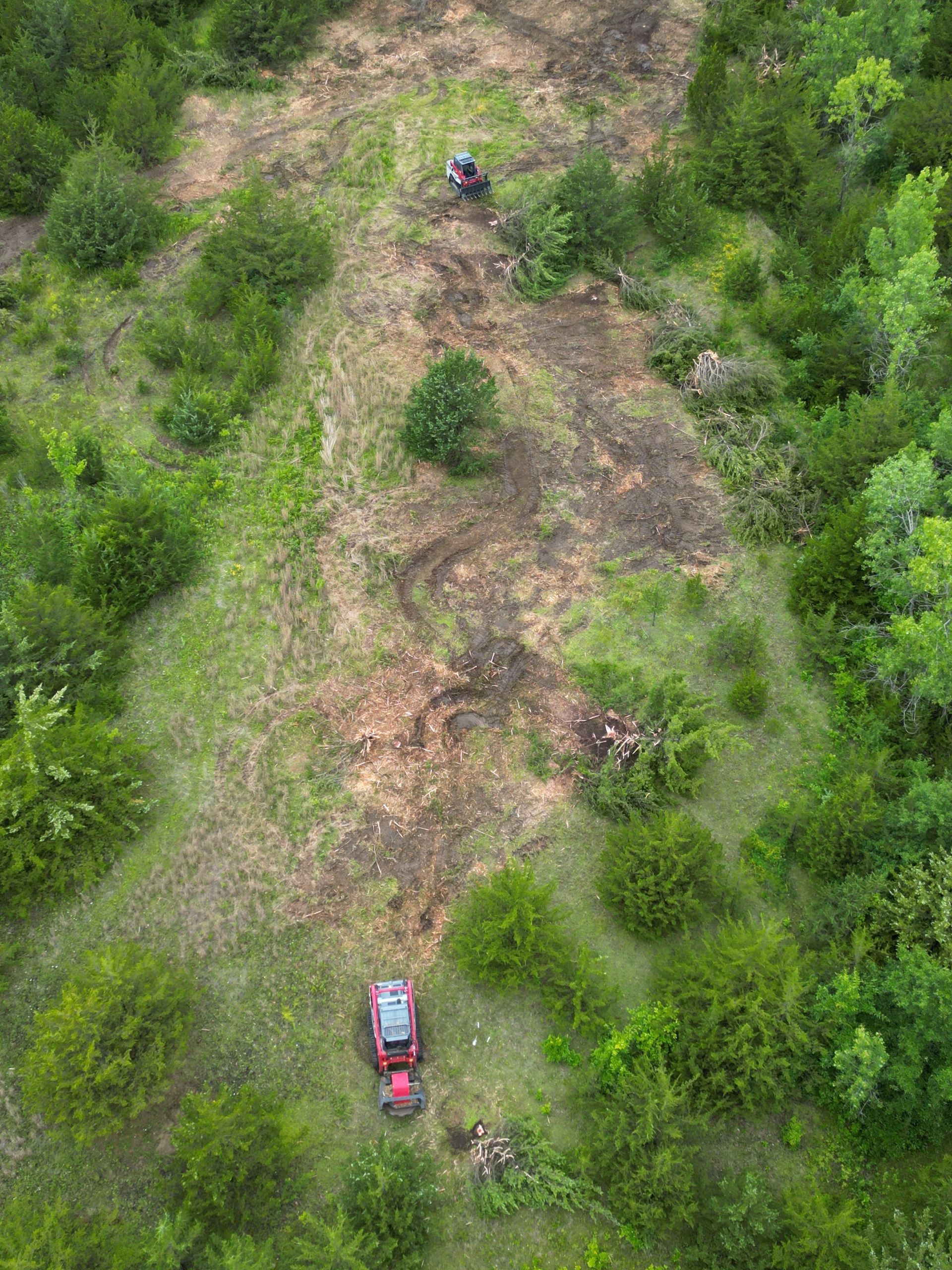
The process uses tracked equipment to grind standing brush, saplings, and small trees into a mulched layer that settles directly onto the existing soil surface. This approach leaves a clean seed bed for future planting. Properties along the Des Moines River bottom and Raccoon River corridor — where dense woody growth chokes out understory plants and restricts deer movement between bedding and feeding areas — see immediate improvement in visibility and travel corridor function.
Request a property walkthrough to evaluate clearing zones and habitat objectives before any equipment arrives on site.
What the Mulched Layer Does for Soil and Future Plantings
The mulched material decomposes over the following growing seasons, adding organic matter back into Iowa's diverse soils and improving structure for seed germination. Cleared ground prepared through forestry mulching accepts food plot seeding immediately — no additional tillage required in most cases. Badhabitz Outdoors coordinates clearing schedules with planting windows, so Iowa-matched seed varieties can be planted within days of clearing completion.
After mulching, you'll see open sight lines through formerly impassable thickets, defined edges between timber and open ground, and deer sign concentrated along the newly cleared travel routes. The mulch layer itself reduces competition for any planted forbs or grasses that follow.
Clearing decisions here follow habitat goals — stand placement, bedding proximity, pinch point creation — not just acreage removal. Every pass considers how deer will use the space once brush is gone, where bedding cover should remain untouched, and which corridors will funnel movement toward food sources or stand locations.
Questions Landowners Ask Before Clearing Starts
Clients working with forestry mulching services across central Iowa typically want to know how the process fits into broader habitat plans and what the ground looks like afterward.
What size equipment is used for forestry mulching?
A tracked mulching unit handles brush, saplings, trees, and bushes common along Des Moines area river corridors without rutting or compaction damage.
How soon can I seed food plots after mulching?
Ground is ready for seeding within days if moisture and temperature conditions align with the chosen seed variety's germination window.
Does mulching kill tree root systems or just grind surface growth?
The process grinds aboveground material that increases the effectiveness of herbicide on regrowth.
What happens to the mulched material left on the ground?
It decomposes over the following growing seasons, adding organic matter to the soil. Seeding mulched areas can reduce the erosion risk on sloped ground during Iowa's heavy spring rains.
Why choose mulching instead of burning or dozing brush piles?
Mulching avoids the permitting requirements and air quality restrictions that apply to large-scale burning in central Iowa, and it eliminates the soil disturbance and erosion that follow dozer work on properties.
Badhabitz Outdoors approaches every clearing project as a habitat manager, not a tree service — the goal is afunctional wildlife habitat, not just open acreage. Schedule a site consultation to map clearing zones and discuss how the work fits into your broader food plot and stand placement strategy.